Whether you need backend migration, transparency and consolidated data across multiple backends, or simply
more stability – an OCPP broker makes every charging network controllable.
Multi-backend connectivity and vendor freedom
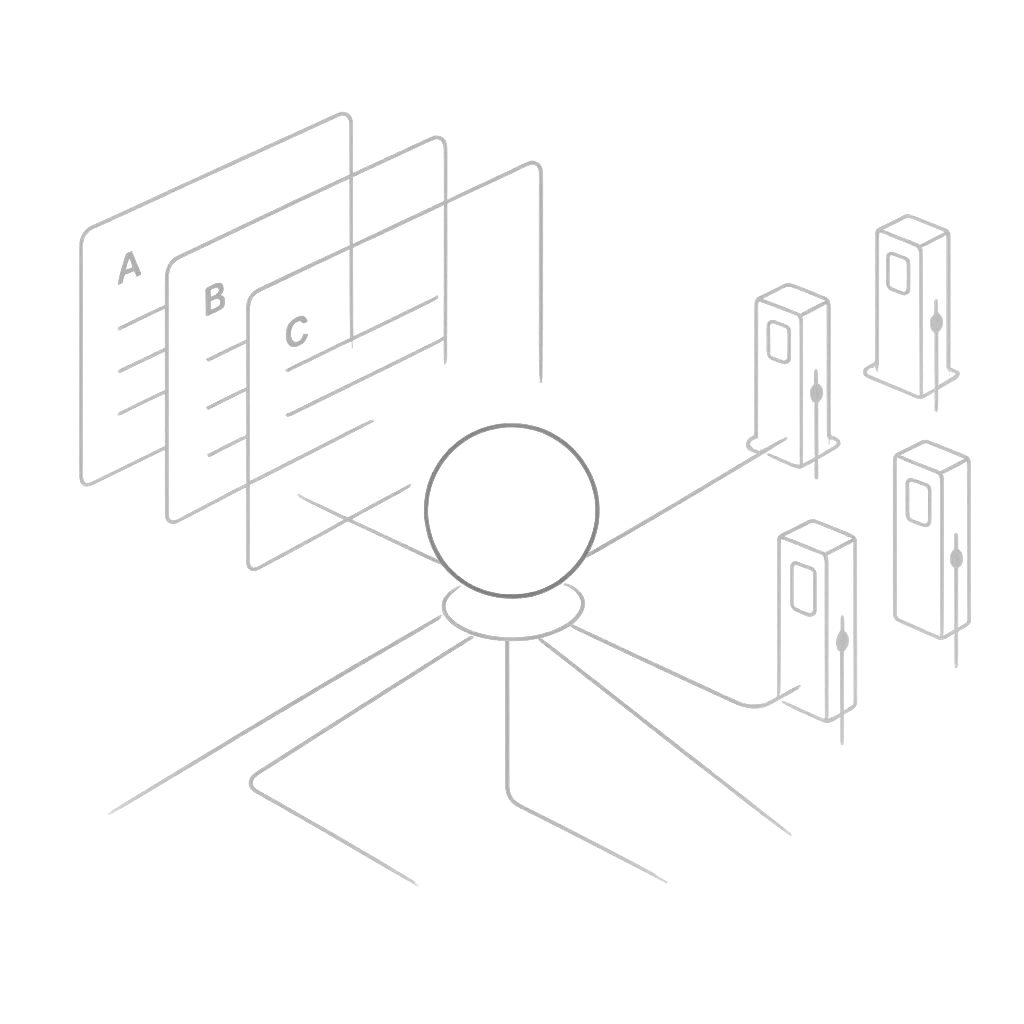
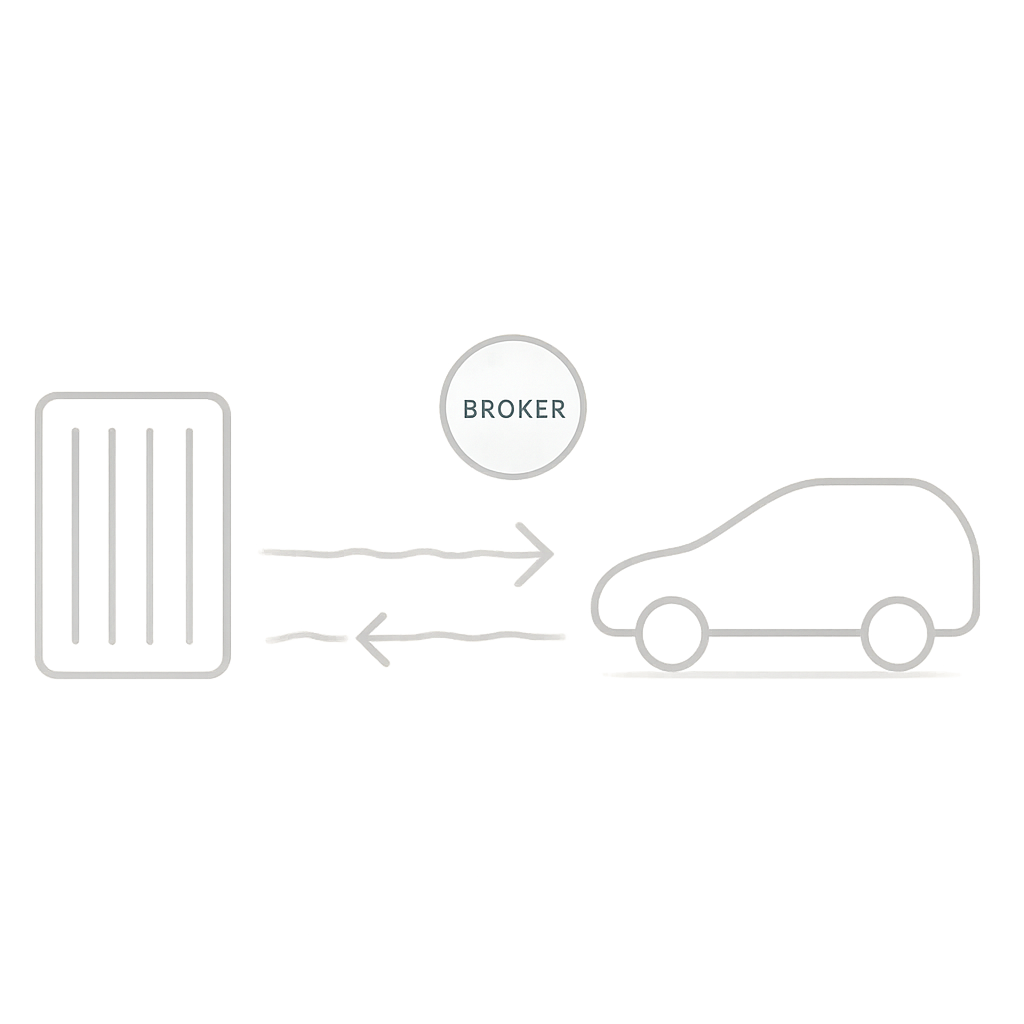
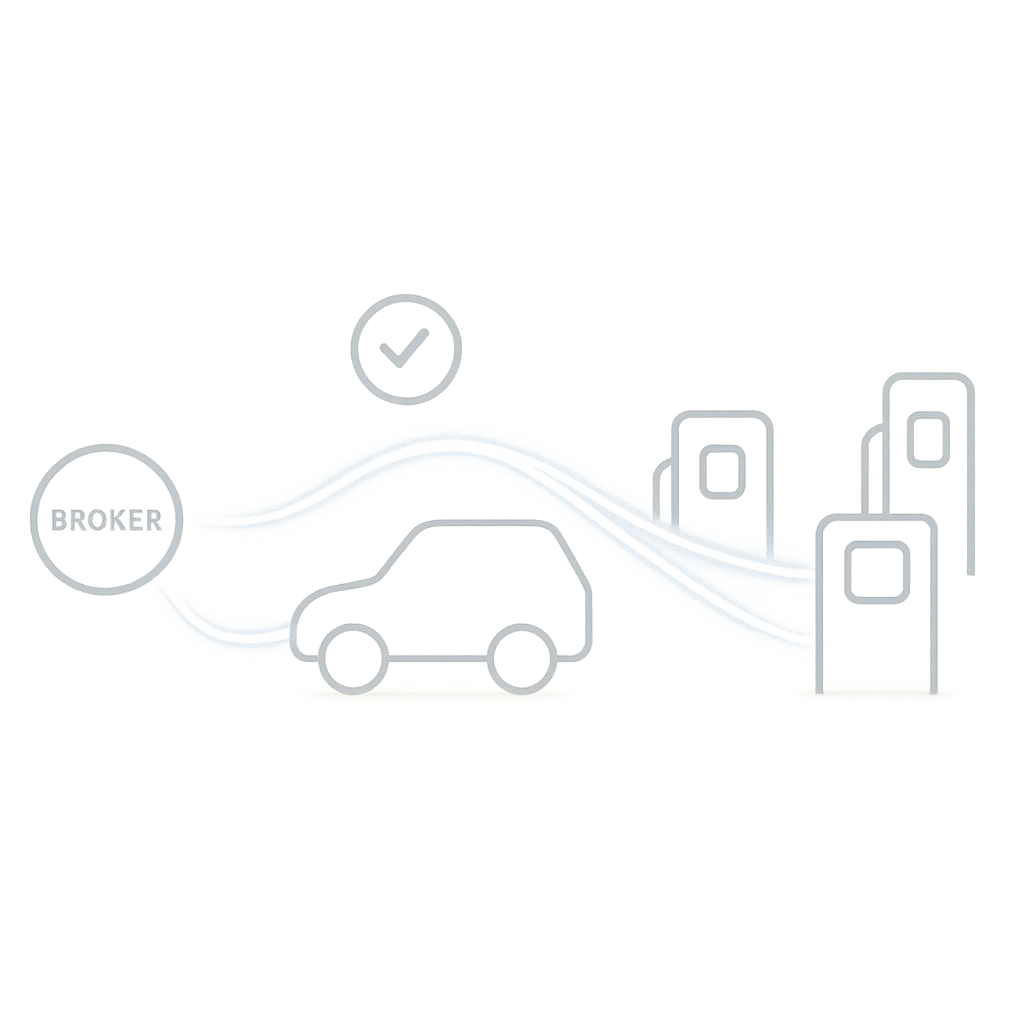
An OCPP broker lets a charge point or network connect to several backend systems at once. That enables a
vendor-neutral setup and avoids lock-in – operators can mix hardware and software freely or switch between
charge point management systems (CPMS) as needed. For example, a charging provider can integrate different
management platforms or services in parallel, ensuring interoperability between hardware and backend vendors
and keeping the freedom to choose or change partners without replacing chargers or reconfiguring them onsite.
Seamless backend switching and migration without downtime
A common use case is migrating from one backend to another without taking chargers offline. The OCPP gateway
acts as a dynamic router that can reroute charger communications instantly. Operators can move some chargers to
the new system while others stay on the old one, all without manual device reconfiguration or operational
interruptions. This makes testing new platforms or consolidating systems much easier while keeping charging
running continuously.
Parallel testing and data duplication
In complex EV charging networks, operators often want to run multiple backends in parallel – for example to
test a new software platform or send data to a separate analytics system. An OCPP broker supports duplicating or
segmenting traffic so the same charger can report to two systems simultaneously. This enables use cases such as
A/B testing a new CSMS alongside production, sending live data to a data warehouse or AI engine, or running a
staging environment next to production without separate chargers. It speeds up innovation and troubleshooting by
enabling safe parallel experiments.
Interoperability across protocols and versions
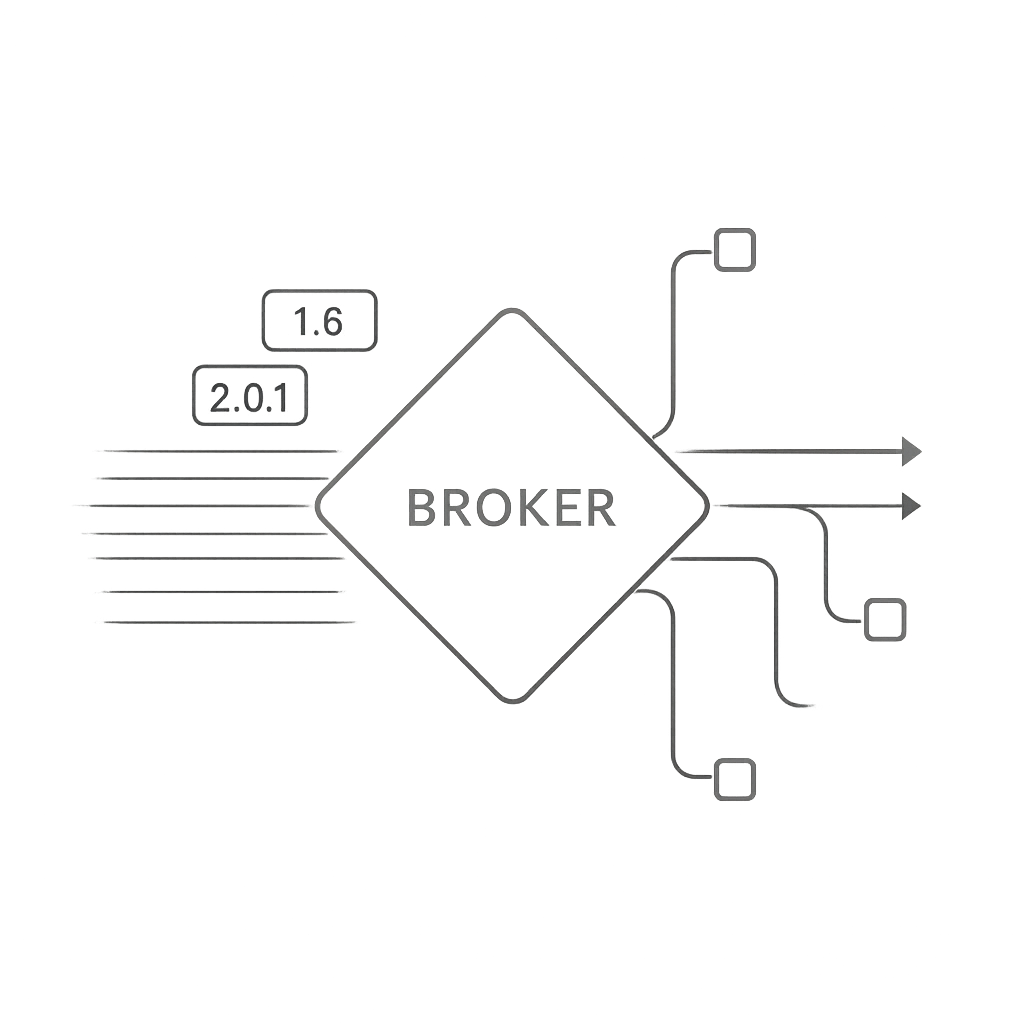
A broker improves interoperability in heterogeneous networks. It can bridge different OCPP versions (1.5, 1.6,
2.0.1, etc.) and even translate into other protocols or messaging systems (e.g., forwarding OCPP messages via
MQTT). This is essential for networks with mixed charger models or legacy systems – the broker ensures every
charger can communicate with central systems regardless of protocol differences. It essentially acts as a
universal translator so legacy chargers and the latest OCPP 2.0.1 stations can coexist, and it can feed
charging data into IoT hubs or enterprise message buses for further processing.
Real-time monitoring and troubleshooting
An OCPP gateway provides a central point for real-time visibility into all communication between chargers and
backends. It is used for diagnostics and performance monitoring. Operators and engineers gain full transparency
over every OCPP message (authentication, start/stop transaction, heartbeat, faults, etc.) flowing between
chargers and backends. When issues arise, they can view live logs and even debug message interactions without
logging into each charger or interrupting service. This greatly improves troubleshooting – for example, a
support team can use the broker's message log from a central console to pinpoint why a charger could not start a
session.
Selective data forwarding and custom routing
Many operators only need to share specific data with third parties (e.g., utilities, billing partners). An OCPP
broker supports granular forwarding rules – you can route certain message types to specific endpoints. For
instance, you can send MeterValues and transaction records to a billing system or e-roaming platform while
directing control commands (start/stop, unlock) only to the primary CPMS. The broker enables this by letting
operators enable or disable OCPP message types per connected service. This selective forwarding ensures each
partner only receives the data they need (improving data protection and reducing noise) and supports
integrations such as a dedicated load management system that only receives load-control messages. In short, the
broker can act as an intelligent filter that forwards messages contextually for billing, reporting or site
control applications.
Wallbox support & remote services
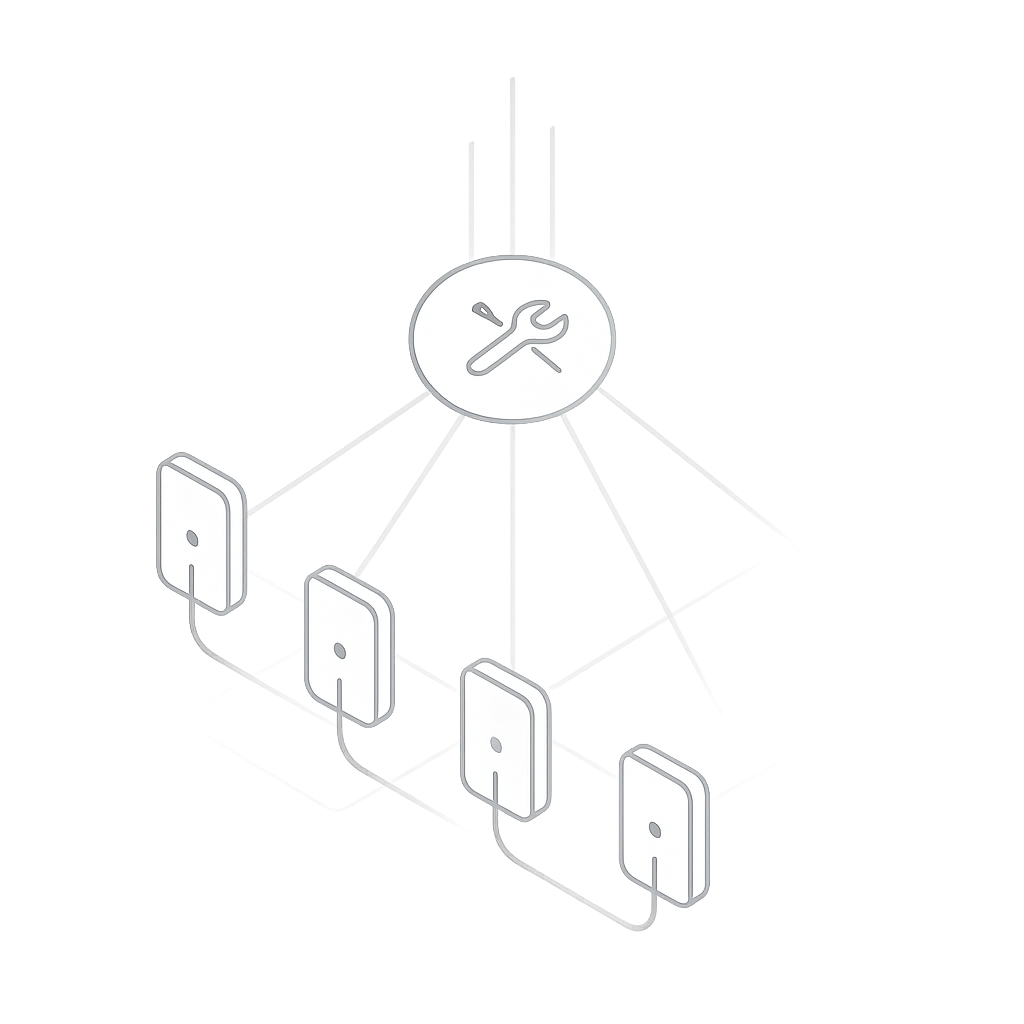
The broker unlocks a dedicated support case for wallbox manufacturers: customer wallboxes connect through the
broker and can be analyzed, configured and provisioned with standard setups centrally. Firmware updates and
device-specific diagnostics can be delivered, and special electrician access enables safe unlocks, checks or
resets. The result is an end-to-end remote service that minimizes field support and gets end users charging
again faster – including optional parallel reporting for manufacturer support teams.
Integration of smart charging and load management
As smart charging (dynamic adjustment of charging power) becomes more important, brokers act as a bridge to
energy management systems (EMS) and load controllers. In a typical scenario, a local load management system must
send commands (such as adjusting charging current or pausing a session) to stations without replacing the entire
backend. An OCPP proxy/broker can intercept these smart charging OCPP commands and forward them to a dedicated
system (e.g., a local controller or cloud EMS) while other messages still flow to the main CPMS. This enables
advanced load optimization strategies (peak shaving, dynamic load balancing) by coordinating site controllers
with the central system. Brokers also support custom charging profiles and schedules via OCPP, enabling
optimized energy use and cost savings. Essentially, the gateway makes it easy to integrate intelligent charging
algorithms or V1G load management without disrupting primary operations.
AI-driven analytics and predictive maintenance
With an independent broker aggregating all charging data, operators can use AI and machine learning on that
stream to improve operations. A prominent use case is predictive maintenance – analyzing charger behavior to
predict failures or service needs before they happen. Abnormal patterns in temperature readings or error codes
can trigger proactive service tickets. AI can also detect anomalies or fraud (e.g., flagging unusual charging
sessions or potential energy theft). Some platforms integrate AI services via the broker: the broker can forward
relevant telemetry to an AI module that sends alerts back to the operator. By embedding AI analytics into the
OCPP data flow, charging providers get smarter alerts, automated fault diagnostics and even optimization advice
(e.g., ideal charging times or load balancing strategies) to improve uptime and efficiency.
Optimizing fleet and depot charging
Fleet operators (e.g., delivery vans, bus depots) use OCPP brokers to better manage complex charging needs
across vehicles and locations. The broker centralizes control of many chargers across brands and depots,
providing a single view for fleet charging. Key use cases include scheduling and prioritized charging so
vehicles needed earlier are charged first, and load balancing so depots do not exceed power limits. An OCPP
broker can integrate with fleet management software by passing vehicle state of charge and charger status to
enable smarter decisions. It also supports regional segmentation – grouping chargers by depot or geography and
applying different policies to each. Overall, this leads to optimized depot operations (vehicles ready when
needed, minimal energy costs/downtime). For example, a bus operator can minimize peak consumption by staggering
overnight charging while the broker ensures every bus is charged by morning as planned.
Integration of payments, billing and reimbursements
Charging providers often need to integrate new payment solutions or billing partnerships. An OCPP gateway can
forward transaction events to external payment service providers, enabling seamless payments or loyalty programs
alongside the charging network. This includes integrating card terminals, mobile payment apps or RFID billing
without tightly coupling them to charger firmware. The broker can also support reimbursements for employees or
home charging by securely forwarding session data to employers or fleet managers. For instance, when employees
charge company EVs at home, the broker can automatically send energy consumption data to a reimbursement system.
As a clearinghouse for billing data, the broker ensures flexible business models (different tariffs, roaming,
separate billing) can be implemented without changing the core CPMS – useful for CPOs and e-mobility providers
expanding their payment and billing options.
Plug & Charge (ISO 15118) support
Plug & Charge (PnC) is a standard that lets EV drivers simply plug in, authenticate automatically and start
charging thanks to digital certificates (defined by ISO 15118). OCPP 2.0.1 supports this natively, and an
advanced broker keeps ISO 15118 communication flowing smoothly to the backends. The use case is to provide EV
drivers a seamless charging experience without RFID cards or apps. Once the driver connects, the vehicle and
charger perform a secure handshake (using PKI certificate exchange) and the session is authorized automatically.
The broker must process these new message flows and may coordinate with certificate management services. By
supporting PnC, the OCPP gateway future-proofs networks for effortless authentication and payment, which is
increasingly important as more PnC-capable cars and chargers enter the market. It gives CPOs an advantage in
usability and security.
Vehicle-to-Grid (V2G) and energy return
With bidirectional charging (V2G) emerging, an OCPP broker is key to handling the growing complexity of energy
flows to and from vehicles. In V2G scenarios, an EV can return energy to the grid or site during peak times or
as a grid service. OCPP 2.0.1 introduced features such as energy transfer modes and extended event data to
support this bidirectional exchange. An OCPP gateway can coordinate between the vehicle, charger and multiple
parties (utilities or grid operators) to execute V2G commands and reports. For example, an aggregator could use
the broker to instruct a group of EVs to discharge a certain amount during peaks and recharge them later. The
broker ensures required messages (such as start/stop transaction with energy delivery direction and regular
meter values) reach the right systems. This lets EV fleets act as a distributed battery – supporting the grid at
peak times, participating in energy markets or forming a virtual power plant across many EVs. By supporting V2G
use cases, the broker helps unlock new revenue (selling energy back) and grid stabilization services through the
charging network.
Firmware updates and asset management remotely
Another important scenario is updating and maintaining chargers. A broker can help with remote firmware
management by brokering update commands. Instead of updating each station through its native platform, an
operator can use the broker to send OCPP FirmwareUpdate messages or diagnostics requests to chargers across
different backends. This is especially useful when a network includes multiple vendors or when the primary CPMS
does not handle firmware well – a dedicated maintenance tool can integrate via the broker. Additionally, the
broker centralizes remote diagnostics (resets, unlock commands, retrieving error logs). This improves operational
efficiency by standardizing charger maintenance tasks through the broker. Field technicians or support systems
can interact with any charger over OCPP (via the gateway) and run fleet-wide health checks or software updates.
Firmware rollouts and fixes can therefore be executed faster and with less manual effort, maximizing charger
uptime.
Scalability and high availability for large networks
An OCPP broker is often deployed to support enterprise-scale charging rollouts. By decoupling chargers from a
single backend, networks can grow without bottlenecks. Modern OCPP proxy architectures are lightweight and can
efficiently handle thousands of concurrent charger connections. They can be deployed in cloud or on-prem
clusters to ensure high availability and failover support. Even when a network expands to hundreds or thousands
of stations across regions, the broker can scale horizontally to manage the load. The goal is reliable
communication at scale – critical for utilities or nationwide CPOs. The broker centralizes control so new
stations or sites can be added quickly, and it reduces strain on individual backends by distributing
connections. In short, it provides a future-proof, scalable infrastructure where adding chargers or new services
does not compromise stability, supporting rapid EV infrastructure growth reliably.
Resilience and backup
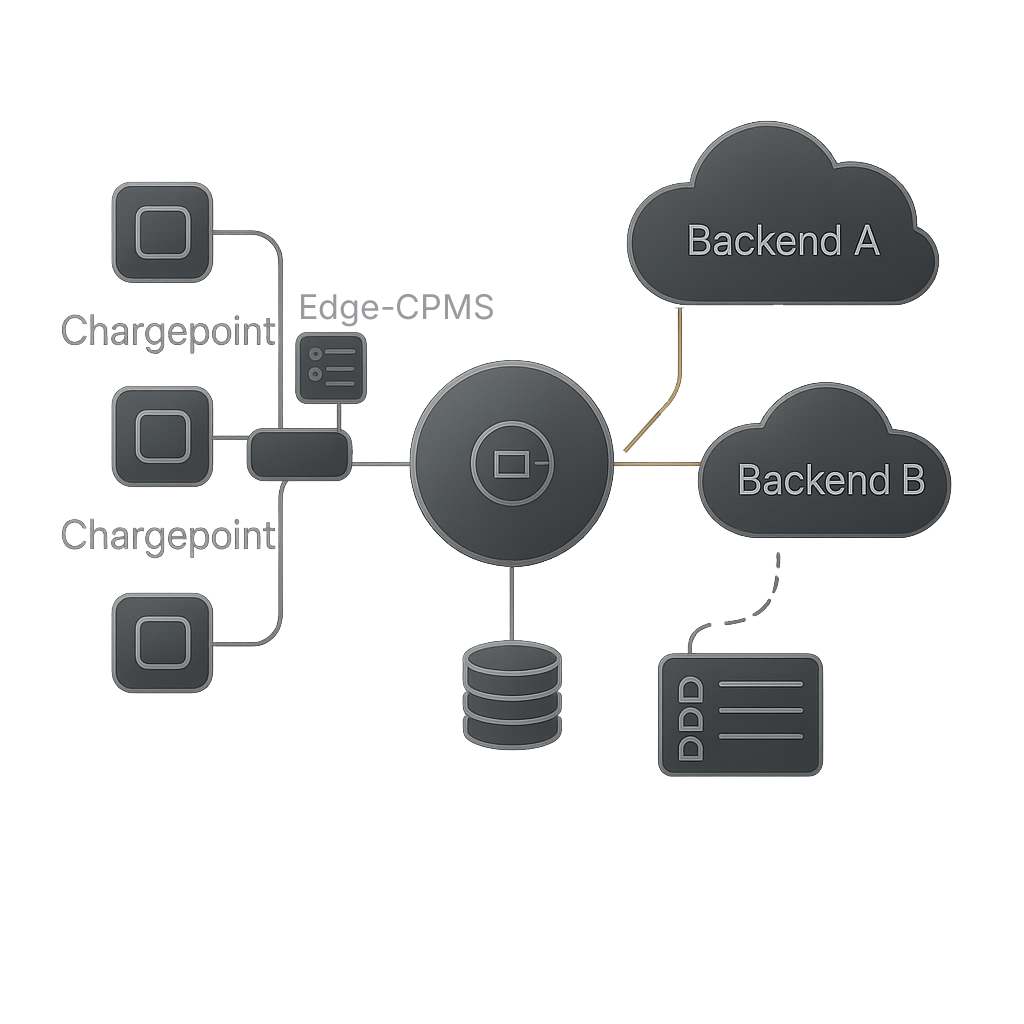
PIPELET ships with an integrated mini charge point management system (Mini-CPMS) that can take over in an
emergency – optionally even onsite on an IoT edge device. If a backend fails, it can switch to an alternative
system to keep operations running without interruption.
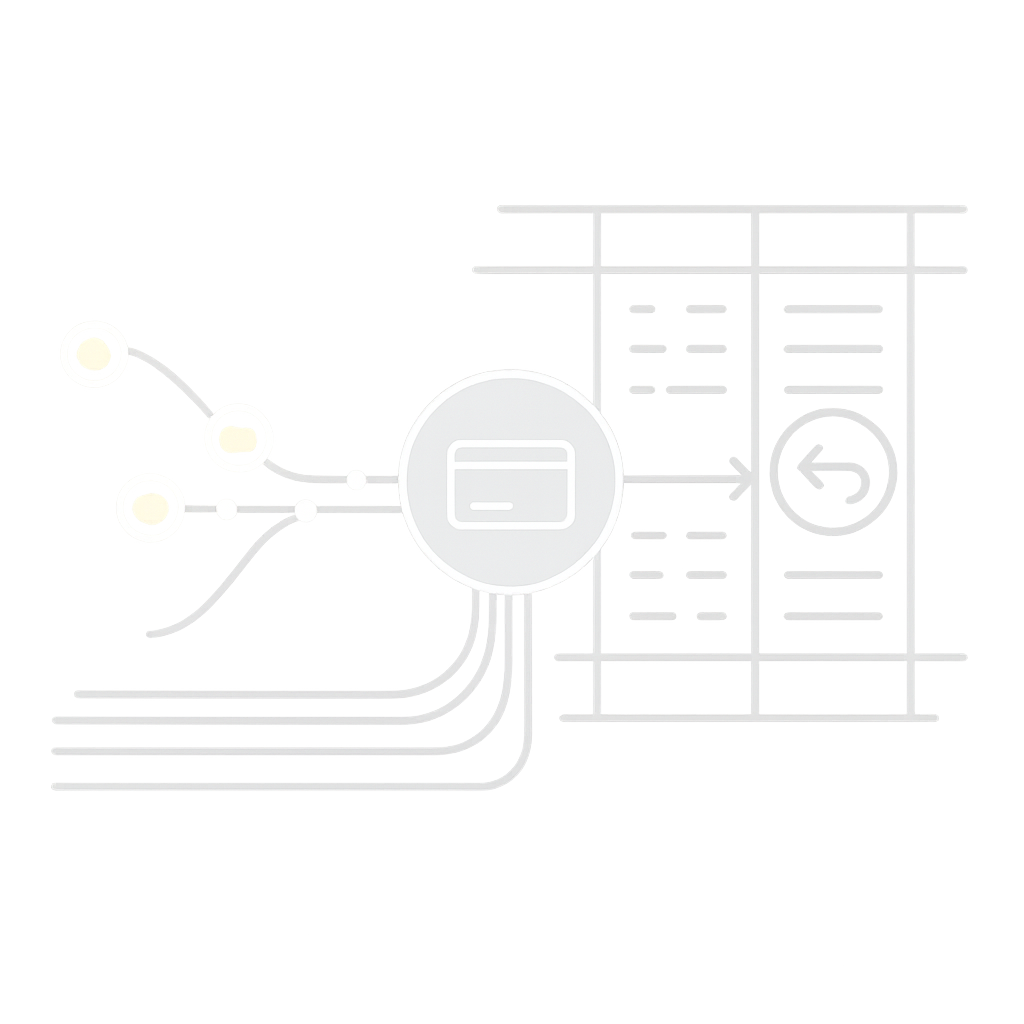
The broker also stores all messages during operations and can continue cleanly after disruptions or resync.
For enterprises, PIPELET can automatically build and maintain site-specific RFID lists with valid users –
ensuring controlled, stable access even in exceptional situations.